 Learn Quran
The scientific benefits of reading Quran are no longer a matter of faith alone. EEG readings document measurable brain wave shifts during recitation. Clinical studies in intensive care units track cortisol reduction in patients who listen to Quranic audio.
The scientific study of Quran reading draws on neuroscience (brain wave activity, neural plasticity), endocrinology (cortisol and adrenaline levels), clinical psychology (anxiety, mood, cognitive function), and phonetics (acoustic frequency effects on human tissue).
Each discipline has produced consistent findings. Understanding this multi-disciplinary framework helps readers evaluate the evidence rather than simply accepting claims at face value.
This article examines ten scientifically documented benefits — specific, evidenced, and explained — for anyone who wants to understand what is actually happening inside the brain and body of a person who reads or listens to the Quran.
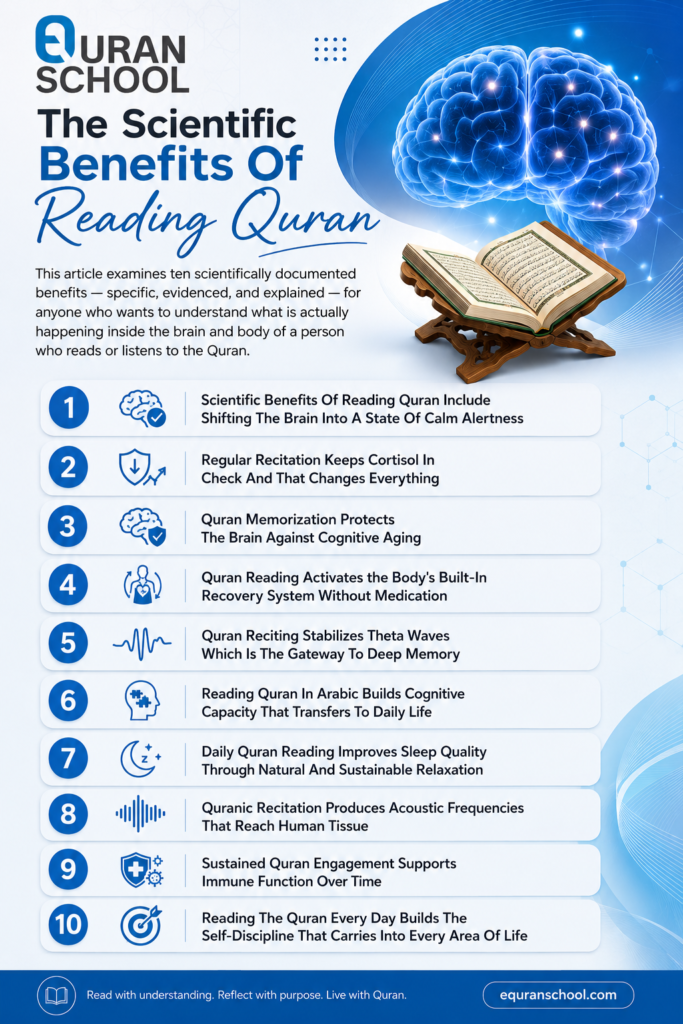
1. Scientific Benefits Of Reading Quran Include Shifting The Brain Into A State Of Calm Alertness
Alpha brain waves — electrical oscillations measured between 8 and 12 Hz — characterize what researchers call “relaxed wakefulness.” This is the mental state associated with creative thinking, receptive learning, and emotional regulation while remaining fully conscious.
It is the neurological sweet spot between the scattered distraction of high-frequency beta dominance and the drowsiness of theta activity. EEG studies published on platforms including PubMed and SciSpace confirm that listening to Quranic recitation raises alpha wave power significantly — in some studies surpassing the alpha-inducing effects of classical music.
The mechanism involves the rhythmic, measured structure of recitation: the elongations (mudood), deliberate pauses, and phrasing patterns of Tajweed create a predictable acoustic environment that the auditory cortex responds to by reducing high-frequency stress patterns.
The practical implication is direct. Reading or listening to the Quran before focused work, a difficult conversation, or sleep sets the brain into a neurological state more conducive to clarity, retention, and calm. Understanding the benefits of quran recitation starts here — not in abstract theology but in measurable electrical activity in the prefrontal cortex.
Book a Free Trial in Our Online Quran Recitation Classes
Read also: Benefits Of Reading Quran At Fajr

2. Regular Recitation Keeps Cortisol In Check And That Changes Everything
Cortisol is the body’s primary stress hormone. When chronically elevated — which describes the baseline physiological state of millions of people navigating financial pressure, professional demands, and social anxiety — it damages the hippocampus, suppresses immune function, disrupts sleep, and accelerates cardiovascular disease.
Research documented in the International Journal of Public Health and in clinical studies of patients in intensive care units, women during labor, and students before examinations consistently shows that Quranic audio reduces cortisol and adrenaline secretion.
Patients who received Quranic recitation as an auditory intervention reported measurable reductions in anxiety scores on validated clinical instruments. The Tajweed-governed breathing pattern is central to the mechanism. Reciting the Quran correctly — with extended vowels, deliberate pauses, and controlled breath pacing — produces prolonged exhalation cycles that stimulate the vagus nerve.
Vagal activation triggers the parasympathetic nervous system: heart rate slows, blood pressure drops, and the body shifts from “fight-or-flight” into “rest-and-repair” mode. This is not metaphor — it is measurable hemodynamic change. The health benefits of reading quran are, in this respect, as physiologically grounded as any prescribed breathing intervention in clinical medicine.
Book a free trial class at E Quran School
Read also: Benefits Of Reading Quran At Fajr

3. Quran Memorization Protects The Brain Against Cognitive Aging
This benefit is specific to Hifz — the formal memorization of the Quran — and the evidence is striking.
Studies published in the Journal of Medicinal Chemistry Science report that sustained Quran memorization raises serum levels of BDNF (Brain-Derived Neurotrophic Factor), a protein that supports the growth of new neurons and strengthens synaptic connections in the hippocampus — the brain region responsible for long-term memory.
Neuroimaging data indicates that individuals engaged in sustained complex memorization show increased grey matter volume in memory-associated regions. Longitudinal projections suggest that regular memorizers may delay the onset of Alzheimer’s disease and other dementias by an estimated seven to fourteen years.
The practical question for many families is how to access structured Hifz instruction that actually works for non-Arabic speakers. The Quran Memorization (Hifz) Course at EQuran School is built precisely to address this — pairing proper Tajweed with systematic retention techniques that make Hifz both a spiritual achievement and a documented cognitive investment.

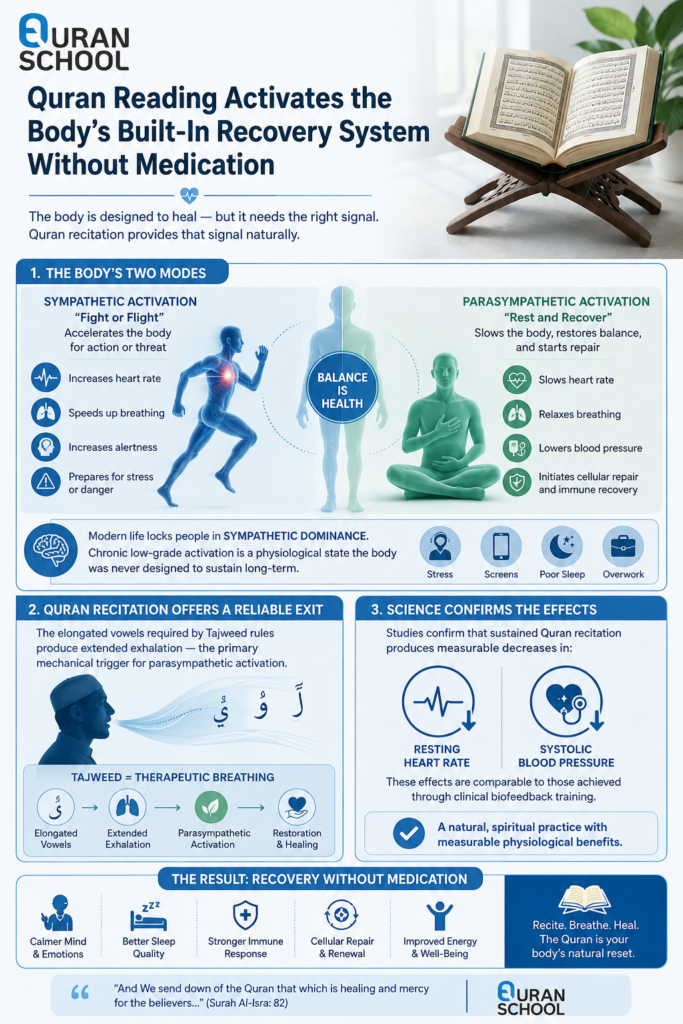
4. Quran Reading Activates the Body’s Built-In Recovery System Without Medication
The autonomic nervous system operates in two modes. Sympathetic activation accelerates heart rate, breathing, and alertness in preparation for action or perceived threat. Parasympathetic activation does the opposite: it slows the heart, relaxes smooth muscle, lowers blood pressure, and initiates cellular repair and immune recovery.
Modern life tends to lock people in sympathetic dominance. Chronic low-grade activation is a physiological state the body was never designed to sustain long-term.
Quran recitation offers a reliable exit. The elongated vowels required by Tajweed rules produce extended exhalation — the primary mechanical trigger for parasympathetic activation. Studies confirm that sustained recitation produces measurable decreases in resting heart rate and systolic blood pressure, effects comparable to those achieved through clinical biofeedback training.
For those new to this practice, quran recitation for beginners programs at EQuran School teach the basic rules of Tajweed with this physiological benefit — among many others — as a natural outcome of correct technique from the very first lesson.
5. Quran Reciting Stabilizes Theta Waves Which Is The Gateway To Deep Memory
Beyond alpha waves, research also documents increases in theta wave activity (4–8 Hz) during contemplative Quran reading. Theta waves are associated with deep meditative states, emotional memory consolidation, and what psychologists call “integrative processing” — the capacity to connect new information meaningfully to existing knowledge and experience.
This neurological state is the same one that skilled therapists attempt to induce during psychotherapeutic work involving emotional processing and insight. Quran readers enter it naturally through contemplation of the verses — particularly verses that engage the deepest questions of human experience: mortality, meaning, divine mercy, and accountability.
The benefits of reading quran in this dimension are therapeutic in the clinical sense of the word. Regular engagement with the text appears to support emotional regulation, reduce rumination, and improve the composite measures of mood, resilience, and life satisfaction that researchers classify as psychological well-being.
Reserve your free trial lesson for Quran Reading Classes
See Us in Action
Watch a quick snippet from our live, interactive classes below and see how our teachers make learning engaging for all ages!
Start Your Quranic Journey Today
Experience our interactive online classes with a dedicated tutor.
Get Your Free Trial
6. Reading Quran In Arabic Builds Cognitive Capacity That Transfers To Daily Life
Arabic is phonologically one of the most demanding languages for non-native speakers. Its consonant inventory includes sounds — pharyngeals, uvulars, emphatic consonants — that require precise and conscious coordination of the tongue, throat, and soft palate. Learning to produce these sounds correctly, which Tajweed demands, constitutes a form of fine motor and neurological training for the speech-production system.
The benefits of reading quran in Arabic therefore extend well beyond religious observance. For non-Arabic-speaking students in Western contexts, the phonological training involved in correct recitation provides measurable cognitive benefits that transfer to academic and professional performance.
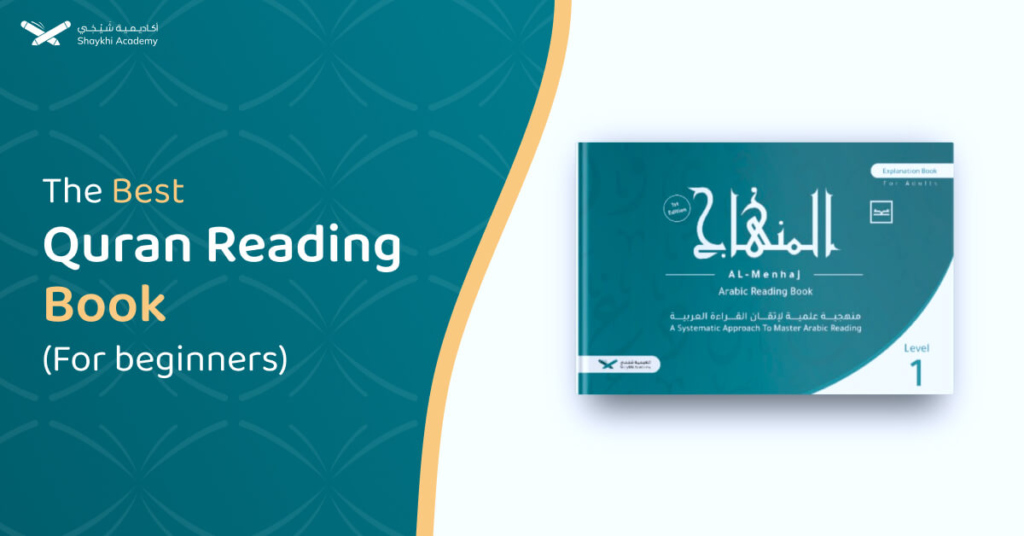
Most online Quran platforms use generic Arabic phonics materials designed for native Arabic children. EQuran School developed the proprietary Al-Menhaj Book — authored by Luqman ElKasabany — specifically for non-Arabic speaking adults and children in Western contexts.
The neurological benefits of phonological training are only realized when the learner is working at the right level of challenge, not struggling against materials that assume a native-speaker baseline.
Explore Al-Menhaj Book for FREE
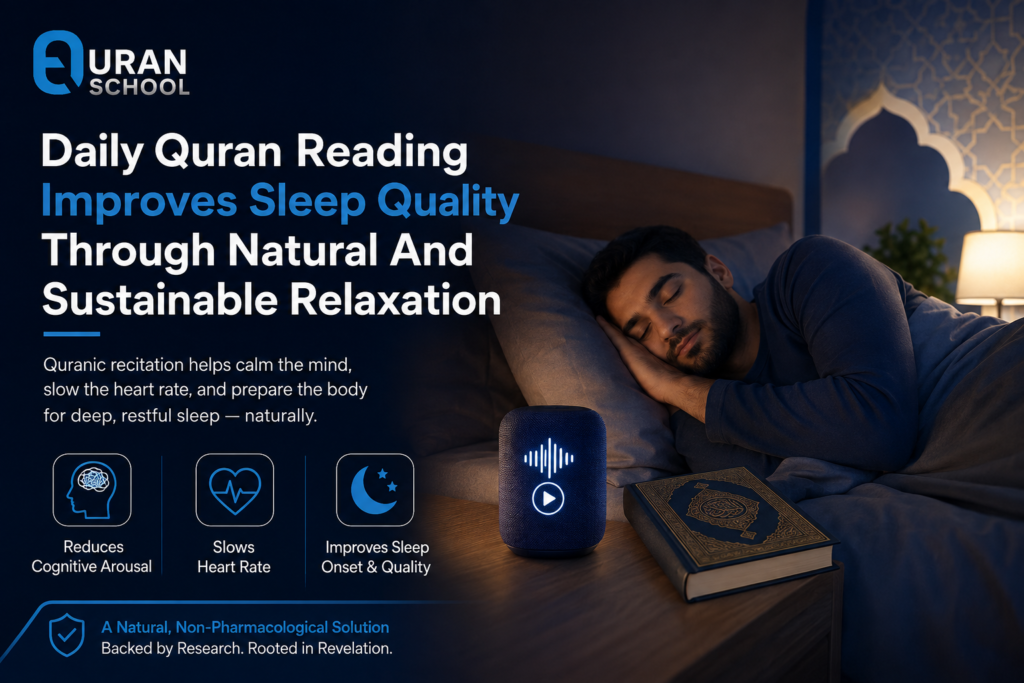
7. Daily Quran Reading Improves Sleep Quality Through Natural And Sustainable Relaxation
Sleep disorders affect hundreds of millions of people globally, and most pharmacological treatments carry significant side-effect profiles and dependency risks. Research into natural, non-pharmacological interventions has produced consistent evidence for one category of auditory input: slow-paced, rhythmically regular, semantically meaningful speech.
Quranic recitation matches this profile precisely. Clinical observations of patients in hospital settings document that Quranic audio exposure in the hours before sleep produces effects comparable to transcendence meditation — reduced pre-sleep cognitive arousal, slower heart rate, and more rapid sleep onset.
Following a 30 day quran reading schedule structured around pre-sleep recitation can, over four to six weeks, meaningfully improve sleep architecture for adults experiencing stress-related insomnia. The consistency of timing, combined with the physiological effects of the recitation itself, conditions the nervous system to associate the practice with the biological transition to rest.
Read also: What The Hadith About Reading Quran With Tajweed Reveals?
Read also: The Best Online Quran Classes for Non-Arabic Speakers
8. Quranic Recitation Produces Acoustic Frequencies That Reach Human Tissue
An area of emerging research — less established than the neurological findings above, but scientifically consistent — concerns the physical effects of specific sound frequencies on human cells and tissue.
Phonetics scholars, including researchers publishing in peer-reviewed Arabic linguistics journals, have examined the acoustic profile of Quranic recitation: its frequency range, amplitude patterns, and rhythmic structure.
The findings align with broader research on therapeutic sound: regular exposure to coherent, rhythmically structured acoustic input appears to support cellular homeostasis — the maintenance of stable internal biological conditions.
The Quran’s specific combination of pharyngeal consonants unique to Arabic, vowel elongation patterns, and measured cadence creates a distinctive acoustic environment that carries its own physiological character. This area of inquiry remains developing, but it adds a phonetic dimension to the importance of learning and teaching quran that goes beyond cultural transmission and into the emerging science of bioacoustics.
Book Your Free Trial in the Quran Qirat Learning Course

Read also: How Many Good Deeds For Reading The Whole Quran?
9. Sustained Quran Engagement Supports Immune Function Over Time
A less commonly cited but documented finding in Quran health research involves immune markers. Studies observing regular Quran listeners over extended periods report positive changes in the functional activity of immune cells — including natural killer cell activity, which plays a central role in the body’s identification and elimination of malignant and virally infected cells.
The proposed mechanism runs through the stress-reduction pathway identified in Benefit 2: chronically elevated cortisol suppresses immune function, and anything that reliably and sustainably reduces cortisol load should theoretically support immune recovery. The clinical observations provide preliminary confirmation of this theoretical prediction.
For those exploring what consistent Quran engagement can add to a complete approach to health and wellness, what we learn from the quran extends into physiological dimensions that early Islamic scholars intuited and that contemporary researchers are now beginning to quantify.
Read also: The Best Free Online Quran Classes for Sisters
10. Reading The Quran Every Day Builds The Self-Discipline That Carries Into Every Area Of Life
This tenth benefit is less about laboratory measurement and more about behavioral science. Research on habit formation and self-regulation is unambiguous: individuals who maintain daily structured practices — regardless of what the specific practice is — demonstrate measurably superior executive function, goal persistence, and capacity for delayed gratification compared to individuals without consistent daily practices.
Daily Quran reading, particularly when it follows a structured preparation that includes a dua before starting quran class, trains the executive function circuits of the prefrontal cortex in exactly the way behavioral scientists describe as optimal for sustained self-regulation. The structure itself is part of the benefit.
Whether you are in the US, UK, Canada, Australia, or anywhere else in the world, the math is the same and the method works: a structured daily Quran practice, sustained over weeks and months, produces neurological, psychological, and behavioral changes that accumulate into a measurably different life.
Book Your Free Session with One of EQuran School’s Certified Teachers
Experience Our Classes
Don’t just take our word for it—watch real-time recordings of our online classes below to experience our teaching style firsthand.
Start Your Quranic Journey Today
Experience our interactive online classes with a dedicated tutor.
Get Your Free TrialStart Your Quran Journey With EQuran School That Built For Western Learners
For Muslim communities in English-speaking Western countries, accessing high-quality Quran education has historically meant either local mosque availability — which varies dramatically by location — or settling for online platforms that were not designed with Western students in mind.
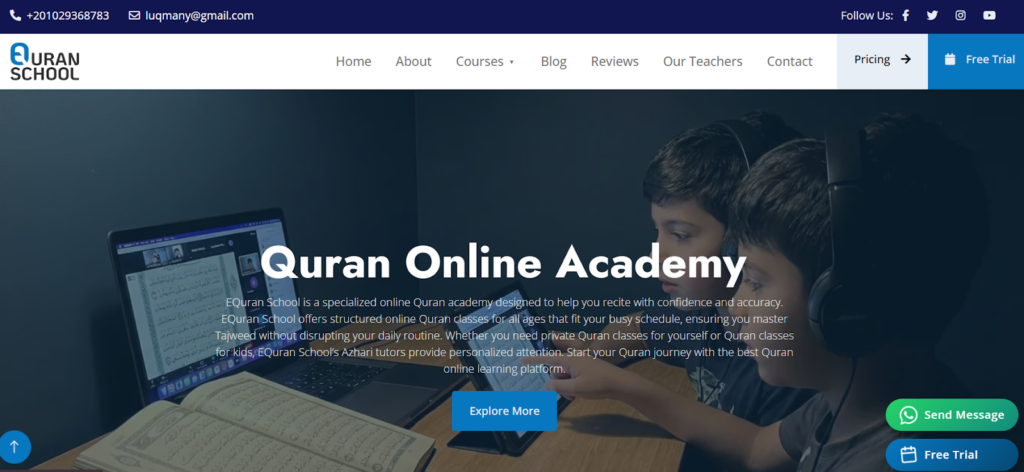
EQuran School was built to solve exactly this problem. Whether you are looking to learn quran online from home or seeking the best way to learn quran online for your children, EQuran School‘s curriculum is structured, progressive, and delivered by qualified teachers who understand the specific challenges non-Arabic speakers face.
The school’s complete curriculum includes:
- Online Quran Learning with Tajweed Course
- Quran Tafsir Course
- Online Arabic and Quran Classes
- Noorani Qaida Course
- Online Quran Classes for Kids
- Learn Quran Easily at Home
- Weekend Quran Classes
- Zoom Quran Classes
Book Your free trial class at E Quran School and discover personalized Quran learning designed around your pace, goals, and individual needs, Insha’Allah.
Start Your Quranic Journey Today
Experience our interactive online classes with a dedicated tutor.
Get Your Free TrialRead also: The Scientific Benefits Of Reading Quran Which Research Now Confirms
Conclusion
The scientific benefits of reading Quran documented across these ten items are not coincidental. They are the physiological expression of what the Quran states plainly about itself: “And We send down of the Quran that which is healing and mercy for the believers” (Al-Isra: 82).
Brain wave research confirms what recitation produces neurologically. Hormonal studies document what stress reduction actually looks like in the bloodstream. Memory research quantifies protection against cognitive aging. Breathing pattern analysis explains vagal activation in anatomical terms.
Phonetic studies reveal the cognitive upside of Arabic training for non-native speakers. Each of these findings is a specific, measurable confirmation of a claim the Quran made fourteen hundred years ago.
For Muslim communities in English-speaking countries, this evidence carries a practical message: the practice you may have inherited without fully understanding carries documented benefits for your brain, your body, and your long-term cognitive health.
Frequently Asked Questions
What are the main scientific benefits of reading Quran?
The main scientifically documented benefits include alpha brain wave activation during recitation, cortisol and adrenaline reduction through Tajweed-governed breathing, enhanced memory and neuroplasticity from Hifz practice, parasympathetic nervous system activation, improved sleep quality, and cognitive gains associated with Arabic phonological training.
Does reading Quran have measurable effects on stress and anxiety?
Yes. Multiple clinical studies — including observations of ICU patients, women during labor, and students before examinations — document measurable reductions in cortisol and adrenaline levels following Quranic audio exposure.
Can non-Arabic speakers benefit from reading Quran, even if they do not understand it?
The neurological effects of alpha wave activation and parasympathetic activation through rhythmic, structured vocalization occur through auditory and phonological mechanisms. The cognitive benefits of Arabic phonological training accumulate through practice regardless of full semantic comprehension at the outset.
Meaning deepens over time and with study — and courses like the Online Quran Tafsir Course at EQuran School are specifically designed to build that understanding progressively.
How long does it take to notice the benefits of reading Quran daily?
Alpha wave effects and immediate stress reduction begin within a single session of sustained recitation. Sleep quality improvements typically emerge after two to four weeks of consistent pre-sleep practice. Cognitive benefits from memorization are cumulative, building over months and years.
The behavioral and self-regulation benefits of a structured daily practice are documented at the thirty- and sixty-day marks in habit formation research.
Is Quran memorization beneficial for children’s brain development?
The research strongly supports this. Children who engage in sustained complex memorization show enhanced working memory, superior verbal recall, and increased grey matter volume in memory-associated brain regions. Starting Hifz during childhood, when neuroplasticity is at its peak, produces the strongest long-term cognitive outcomes.
EQuran School’s Hifz program is structured for both children and adults and can be accessed through dedicated online Quran classes for kids.
What is the best first step for someone who has never read Quran before?
Begin with Arabic phonics through a structured foundational curriculum — EQuran School’s Noorani Qaida program or the Al-Menhaj Book are both designed for exactly this starting point.
Learning the correct articulation of Arabic letters and the basic rules of Tajweed is essential before full recitation, because the physiological benefits documented in this article are most fully realized when recitation follows the rhythmic and phonological patterns the research measured. EQuran School offers trial sessions for new students at all levels.











Leave a Reply