 Learn Quran
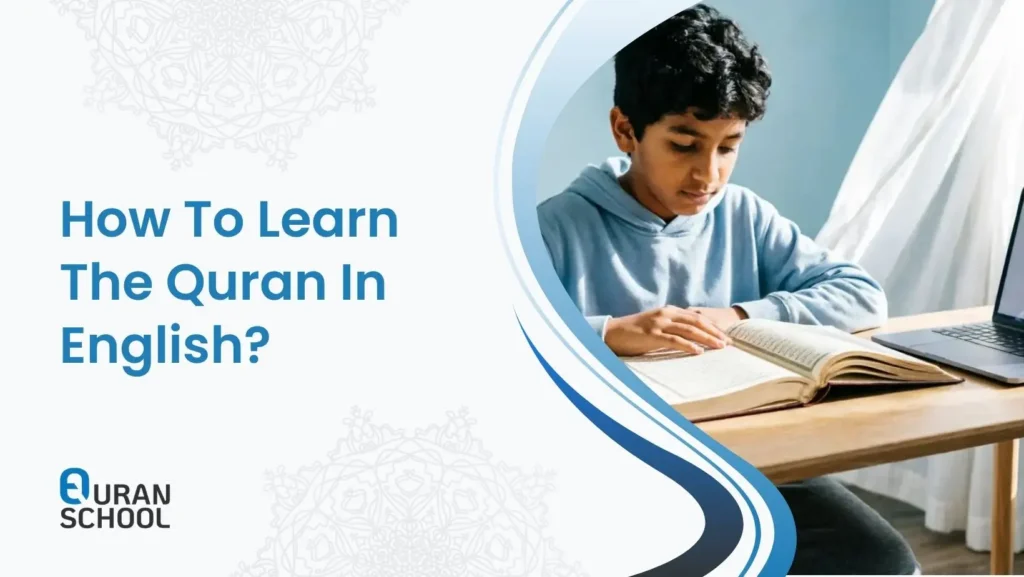
For non-Arab Muslims who haven’t studied Arabic, reading the Quran in its original language can be a significant challenge. While reading translations of the Holy Quran helps bring the meanings closer to their understanding, something is inevitably lost when it’s read in a language other than Arabic.
So, how can this challenge be overcome? This is what we will explore in this article.
Can we learn the Quran in English?
Yes, it’s possible to learn the Quran in English. After seeking help from Allah, the next step is to read the Quran’s English translation. This will bring the meanings closer to your understanding and help you connect with its message.
However, reciting the Quran correctly, with proper Tajweed, requires learning to read Arabic script and apply its pronunciation rules.
The distinction matters: comprehension and recitation are two different skills that can be developed simultaneously or independently. Many students begin by engaging with English translations while slowly building their Arabic reading ability in parallel.
E Quran School’s Quran Reading Classes are specifically structured for this dual-track approach, helping non-Arabic speakers build both recitation ability and meaningful comprehension from the very first lesson.
Reserve your free trial lesson for Quran Reading Classes

How To Learn the Quran as an English Speaker?
The best way to truly understand the Holy Quran is to learn Arabic, especially Quranic Arabic. This may seem challenging, but it becomes manageable if you follow these steps:
1- Learn the essential Arabic skills
Begin by mastering the alphabet, vowels, and common vocabulary. Make sure to also learn the rules of Tajweed, which will refine your recitation and help you read the Quran correctly.
You can start by:
- learning the Arabic alphabet and basic literacy.
- Learn the long and short vowels to improve pronunciation.
- Master the correct pronunciation of Arabic letters and sounds.
- Study Tajweed rules to recite the Quran correctly.
2- Practice what you’ve learned
Consistent practice is key. It helps solidify the letters, words, and rules in your memory, boosts your confidence, and keeps you motivated to continue your journey.
Familiarize yourself with the most common words and vocabulary used in the Quran, learn the essential grammar rules applied in it, and apply everything you’ve learned to gradually read and understand the Quran.
Shots Videos from Our Courses
Start Your Quranic Journey Today
Experience our interactive online classes with a dedicated tutor.
Get Your Free Trial3- Seek guidance during your learning journey
A professional guide can save you time and effort, making your learning experience smoother. They’ll create a personalized learning plan for you, help correct your mistakes, and guide you in improving both your Arabic and Quran recitation. You can find such guidance at EQuran School, where experienced tutors will support you through every step of your Quran learning journey.
Additionally, you can also
There are numerous online resources available, such as articles, YouTube videos, and books. Additionally, professional tutors, like those at EQuran School, can guide you, saving you time and effort.
However, individual abilities vary, and some may find this method difficult. In such cases, you can read the translation of the verses you recite.
Still, to deeply grasp the full meaning of each verse and Surah, learning Arabic is the key.
Start Your Quranic Journey Today
Experience our interactive online classes with a dedicated tutor.
Get Your Free TrialRead also: Ramadan Quran Reading Chart and Schedule
How to Learn the Quran for Beginners English Speakers
If you’re just starting your journey to learn Arabic or find it challenging, you can still begin learning the Quran with the following tips, even if you only speak English:
1- Make Intention (Niyyah) and Ask for Help from Allah
With our own effort, we can’t achieve anything, but with the help of Allah, we can overcome any difficulty. Therefore, it’s essential to ask for Allah’s help, make du’aa, and set your intention to be a better Muslim by reading and learning the Quran.
This step is crucial before you begin your journey to learn the Quran, as sincerity in your niyyah and seeking Allah’s guidance will provide the strength and motivation needed to succeed.
2. Try to Learn Small Surahs
In your daily prayers (Salah), you must recite Al-Fatiha and short surahs. So, try to begin by learning a small surah through listening to a reciter and reading the translation. Once you’ve learned the surah, use it in your prayers.
After you’ve mastered it, move on to another small surah. Continue this process, repeating each step with every surah. By doing so, you will gradually learn more about the Holy Quran, and your understanding and recitation will steadily improve.
3- Seek guidance from a mentor
The previous step becomes much easier with the help of a mentor who can guide you through recitation, correct your mistakes, and explain the meanings of the words and verses.
This approach deepens your understanding and improves your recitation of the Quran, making the learning process more enriching.You can seek such guidance through EQuran School.
4. The Al-Menhaj Methodology Offers the Most Structured Path for Non-Arabic Speaking Adults
For adult learners who have never studied Arabic script, the Al-Menhaj Book — developed exclusively by E Quran School instructor Luqman ElKasabany — provides a purpose-built curriculum for non-Arabic speakers. It introduces the Arabic alphabet systematically, covering letter recognition, correct articulation points (Makharij), and basic Tajweed rules in a sequence designed specifically for adult non-Arabic brains.
Unlike general Arabic literacy programs, the Al-Menhaj Book is Quran-centric. Every lesson moves the student closer to reading Quranic text — not modern conversational Arabic. This makes it far more efficient for students whose goal is Quran recitation, not language fluency.
E Quran School’s Noorani Qaida Course is another excellent entry point for absolute beginners, providing phonetic and script foundations before progressing to full Quran reading.
Join our Noorani Qaida Course and get a free trial

Can a person be rewarded for reading the Quran without understanding it?
Yes, Allah, the Almighty, will reward a person even if they don’t fully understand the meaning of the Quran. However, for a more detailed explanation, you can find the answer below.
In the Holy Quran, Allah subhanahu wa ta’ala says:
“This is a Book (the Qur’an) which We have sent down to you, full of blessings, that they may ponder over its Verses, and that men of understanding may remember.” [Saad 38:29]
One of the main purposes of reading the Quran is to reflect on the meanings of its verses. However, insha’Allah, Allah will reward anyone who reads the Quran even without understanding its meaning.
To truly benefit from reading, though, a person should strive to understand what they are reciting.
In any field of knowledge, no one can truly benefit from what they read unless they understand it and apply what they have learned. Therefore, when reading the Holy Quran, every Muslim should do their utmost to comprehend its meaning.
E Quran School’s Quran Tafsir Course offers live, instructor-guided Tafsir study in English, helping students connect the meaning behind what they recite or memorize with proper scholarly context.
Join our Quran Tafsir Course and get a free trial
Read also: Quran Reading Apps: A Complete Guide for Muslims Worldwide
Do you have to learn Arabic to understand the Quran?
No, you don’t need to learn Arabic to understand the Quran. However, learning Arabic will certainly help you gain a deeper understanding of its meaning.
Should a person learn Arabic or focus on memorizing the Quran?
It is important that he memorizes Surah Al-Fatiha since it is recited in every prayer. However, learning Arabic should come first before attempting to memorize the Quran.
Even if you don’t understand Arabic, you can still read the Quran and gain insight into its meaning through translations. However, memorizing certain surahs is necessary for prayer, so what should come first?
In truth, it’s a process that should be approached together. First, you should familiarize yourself with Tajweed rules, as they enable you to recite the Quran correctly. As you master this skill, you can begin to recite verses and reflect on their meanings, aided by translations.
Finally, the last step is to memorize what you’ve learnt and understood.
It’s important to remember that even some of the greatest companions of the Prophet Muhammad (peace be upon him) spent years learning and reflecting on the Quran. For example, they would learn only 10 ayahs at a time, ensuring they fully understood and applied them in their lives before moving on. They recognised that the Quran’s main purpose is reflection and application, not just memorisation, although memorizing it is undoubtedly a noble and rewarding act.
E Quran School’s Quran Memorization (Hifz) Course integrates meaning-awareness into the memorization curriculum, ensuring students don’t just hold the words — they hold the message.
Begin memorizing the Quran today—your first session is free
Read Also: How to Learn the Quran Online with Tajweed Free?
What Type of Arabic Should I Learn?
If you’re genuinely motivated to learn Arabic, especially to understand the Quran, you might be wondering which type of Arabic to focus on.
If your goal is to understand the Quran and Islamic teachings, we recommend focusing on MSA or Fusha. Not only are these forms the language of the Quran, but they are also widely understood across the Arab world and easier to learn compared to local dialects.
Let’s break it down together.
There are various forms of Arabic, including Fusha, MSA (Modern Standard Arabic), Classical Arabic, and dialects.
- Dialect refers to the spoken form of Arabic used in everyday life by people in different Arab countries. Like any other language, each region has its own version of spoken Arabic, used casually with family and friends.
- Classical Arabic is the older form of Arabic, often associated with the Quran and Islamic texts. It represents the language spoken in the 7th century and throughout the Middle Ages.
- MSA (Modern Standard Arabic) is a modern form of Fusha. This is the formal Arabic used in books, newspapers, official documents, and media. It’s also the language of the Quran, making it highly relevant for anyone seeking to understand the Quran and Islamic sciences.
Read Also: How Long Does It Take To Learn The Quran?
How Long Does It Take To Learn The Quran for an English Speaker?
The time it takes to learn the Quran in Arabic for an English speaker can vary depending on the individual’s ability and dedication. On average, it might take around three months to learn how to read the Quran fluently if you spend about 2 hours learning and practicing each week.
As for memorizing the Quran, it typically requires more time and effort. Many people can achieve this within three years, though it depends on how much time is dedicated daily to memorization and revision.
Ultimately, consistency and sincere intention will make the journey easier, inshaAllah.
Read Also: Dua for Learning Quran
Our Students Reviews
Start Your Quranic Journey Today
Experience our interactive online classes with a dedicated tutor.
Get Your Free TrialRead Also: Dua Before Starting Quran Class
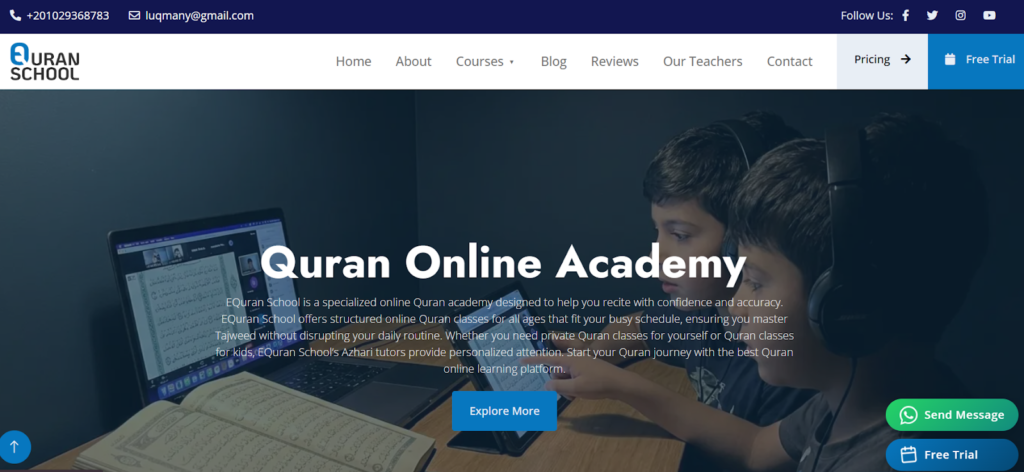
Start Your Quran Learning Path with Qualified Guidance at E Quran School
Whether your goal is to understand the Quran through English, master Tajweed, begin memorization, or build Arabic reading from scratch — structured, expert-led learning is what moves you from intention to lasting progress.
E Quran School offers everything an English-speaking student needs:
- Certified Huffaz and Qaris with 7+ years teaching non-Arabic speakers
- Personalized 1-on-1 sessions tailored to your pace, goals, and schedule
- Flexible 24/7 scheduling for students across all global time zones
- Proprietary Al-Menhaj methodology for complete beginners
- Full curriculum from Noorani Qaida to advanced Qira’at studies
E Quran School provides complete curriculum including:
- Quran Memorization (Hifz) Course
- Online Quran Learning with Tajweed Course
- Quran Tafsir Course
- Online Arabic and Quran Classes
- Quran Qirat Learning Course
- Online Quran Recitation Classes
Book a free trial class at E Quran School and experience personalized Quran instruction that adapts to your unique learning needs, Insha’Allah.
Conclusion
The best way to truly understand the Holy Quran is by learning Arabic, particularly Quranic Arabic, through a series of important steps. If you find this challenging, reading the translation of the verses you recite can still offer insight.
Begin by making the intention (Niyyah) and asking for help from Allah. Start with learning small surahs and seek guidance from a mentor. Insha’Allah, Allah rewards those who read the Quran, even without fully understanding
its meaning. However, every Muslim should strive to comprehend its message, as memorizing certain surahs is essential for prayer.
Arabic comes in various forms, including Fusha, Modern Standard Arabic (MSA), Classical Arabic, and dialects. If your goal is to understand the Quran and Islamic teachings, we recommend focusing on MSA or Fusha.
On average, it may take around three months to learn how to read the Quran fluently. Memorising the Quran typically requires more time and effort; for some, it can be achieved within three years.








Leave a Reply