 Learn Quran
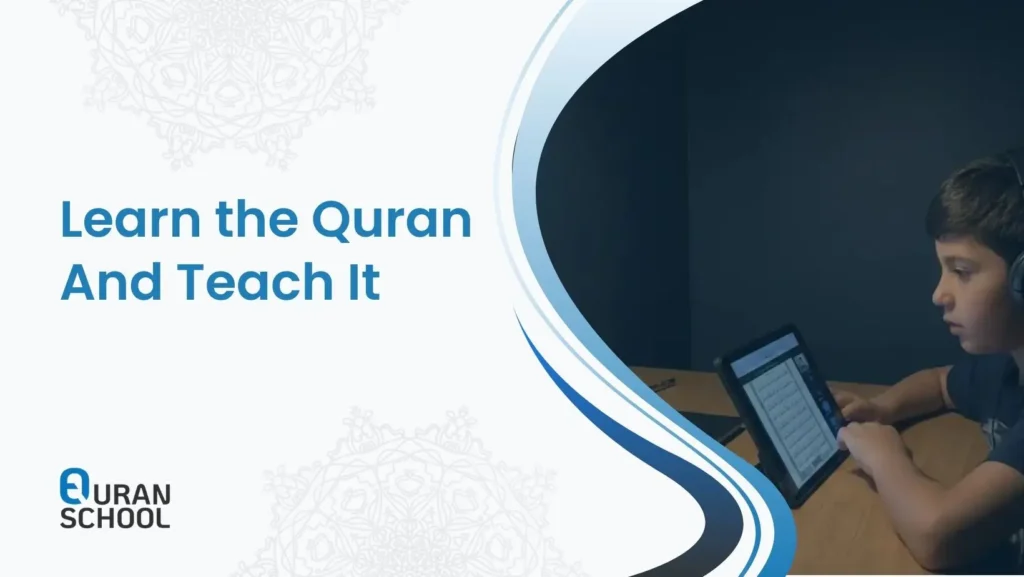
Allah (subhanahu wa ta’ala) describes the Holy Quran as His divine inspiration and as a light. In Surah Ash-Shuraa, He says:
“And thus We have revealed to you an inspiration of Our command. You did not know what is the Book or [what is] faith, but We have made it a light by which We guide whom We will of Our servants. And indeed, [O Muhammad], you guide to a straight path.”
In this article, we will explore the benefits of learning and teaching the Quran. Let’s delve into them together.
The Hadith “The Best Of You Are Those Who Learn the Quran And Teach It”
For any Muslim seeking Allah’s pleasure and striving to walk on the straight path, dedicating effort to learning the Holy Quran and applying its teachings is essential.
The Prophet Muhammad (peace be upon him) said,
“The best of you are those who learn the Quran and teach it.” (Sahih al-Bukhari 5027)
In Arabic, the hadith is:
“خَيْرُكُمْ مَن تَعَلَّمَ القُرْآنَ وعَلَّمَهُ” pronounced as ”khyrokom man talam al koraan wa alamah”
This hadith shows that the most honored among Muslims are those who dedicate themselves to learning the Quran by studying, memorizing, and applying what they learn. One way to apply this knowledge is by teaching it to others.
If you’re looking to enter this blessed circle, E Quran School’s Quran Memorization (Hifz) Course is structured specifically to guide non-Arabic speakers through both dimensions—learning with precision and gaining the tools to eventually teach.
Begin memorizing the Quran today—your first session is free

What are the lessons from the Hadith of Learning and Teaching the Quran?
The hadith mainly teaches us the Importance of learning and teaching the Quran, and here are some key lessons from this hadith:
1. Guidance in daily life
Learning the Holy Quran is essential, as it serves as our guide in daily life and this leads to Jannah in the Hereafter, inshallah.
Muslims should help one another, as we are all brothers and sisters in Islam, forming one Ummah.
2. Passing on knowledge to other Muslims
Passing on knowledge to other Muslims helps to increase understanding within the community.
Teaching the Quran builds community. When a parent teaches a child, when a neighbor guides a new Muslim, when a qualified certified Qari corrects a student’s Tajweed—these acts ripple outward. A single teacher can affect hundreds of lives across generations.
Book Your Free Session with One of EQuran School’s Certified Teachers
3. The nobility of the Holy Quran
The Quran is the most noble book on earth, and every Muslim should strive to learn and teach it, followed by the Sunnah of the Prophet Muhammad (peace be upon him).
This is not the only hadith that highlights the benefits of learning and teaching the Quran. There are several others that encourage us to do the same. Let’s explore them together.
Why are those who learn and teach the Qur’an the best of Muslims?
Learning the Quran restructures one’s internal world. Consistent Hifz review sharpens focus. Mastering Tajweed trains attentiveness to sound and articulation. Understanding Tafsir deepens one’s worldview and ethical reasoning in daily life.
1. Qur’an is one of the greatest ways to worship Allah:
Every Muslim knows that the best speech is the speech of Allah, subhanahu wa ta’ala. Because of that, the best person is the one who strives to learn the Qur’an, as it is one of the best ways to worship Allah. This includes reading the Qur’an, pondering over it, and understanding its meaning.
In Surah Al-Muzzammil, Allah says,
“وَرَتِّلِ الْقُرْآنَ تَرْتِيلًا”, which means, “and recite the Qur’an with measured recitation.”
2. Reciting the Quran leads to a high rank in Jannah
Every good deed a Muslim does in this life is with the hope of achieving a high rank in Jannah, and reciting the Quran is one of the most rewarding of these deeds, you can find this meaning in the following hadith:
‘Abdallāh b. ‘Amr reported that the Messenger of Allah (peace be upon him) said:
“The one who is devoted to the Qur’an will be told, ‘Recite and ascend, and recite carefully as you used to in the world, for your rank will be at the last verse you recite.’”
- This means that the reciter of the Quran who recites, memorizes, and masters it, will be elevated in Paradise according to how much Quran he recites.
- It’s a generous reward from Allah subhanahu wa ta’ala, a reward that brings happiness and blessings in both this world and the Hereafter, inshaAllah.
Start Your Quranic Journey Today
Experience our interactive online classes with a dedicated tutor.
Get Your Free Trial3. The reward of the reciter in life, the grave, and the hereafter
Learning and teaching the Qur’an is one of the noblest goals in a Muslim’s life, and here are hadiths that explain why the reciter of the Qur’an is the best of Muslims.
a. In life: Quran Reciter leads people in prayer:
Abu Mas‘ūd al-Ansāri (may Allah be pleased with him) reported that the Messenger of Allah (may Allah’s peace and blessings be upon him) said:
“The one who is the most versed in Allah’s Book should lead the people in prayer. If they are equally versed in reciting it, then the one who is the most knowledgeable about the Sunnah; and if they are equal regarding the Sunnah, then the earliest one to emigrate; if they emigrated at the same time, then the earliest one to embrace Islam.
b. In grave: Quran Reciter is placed first:
Jabir (May Allah be pleased with him) reported: After the battle of Uhud, the Prophet peace be upon him arranged the burial of two of the martyrs in one grave. In each case, he would ask,
“Which one of them had learnt more Qur’an by heart?” Whichever was thus pointed out to him, was placed by him first in the Lahd.
c. In the hereafter: the Quran Reciter is donned with a crown of nobility:
Narrated Abu Hurairah: the Prophet (peace be upon him) said: “The one who memorized the Qur’an shall come on the Day of Judgement and (the reward for reciting the Qur’an) says: ‘O Lord! Decorate him.” So he is donned with a crown of nobility. Then it says: “O Lord! Give him more!’ So he is donned with a suit of nobility. Then it says: “O Lord! Be pleased with him.’ So He is pleased with him and says: “Recite and rise up, and be increased in reward with every Ayah.’”
As mentioned in the hadith:
The Quran itself will ask Allah Almighty to honor its reciter with a crown of nobility. Not only that, but it also asks Allah to give him even more.
Allah will be pleased with him and raise his rank in Paradise according to how much Quran he has recited.
Other Hadiths About Learning the Quran
Beyond the central hadith of excellence, the prophetic tradition is rich with narrations that illuminate every facet of Quranic engagement. Below are seven authentic hadiths with brief explanations and key lessons drawn from each.
1. The Hadith of the Two Reciters
The Prophet ﷺ first addressed the skill level of the learner directly:
“The one who is proficient in the Quran will be with the noble, righteous, and dutiful scribes (angels), and the one who recites the Quran and falters in it, and finds it difficult, will have two rewards.” (Sahih Muslim 798)
The fluent reciter ascends in rank—but the struggling student is not left behind. Both are honored. This hadith is particularly important for non-Arabic speakers who feel discouraged by their early-stage mispronunciations or slow progress. The Prophet ﷺ guaranteed that difficulty itself carries spiritual weight.
Start Your Quranic Journey Today
Experience our interactive online classes with a dedicated tutor.
Get Your Free Trial2. The Hadith of Quran’s Intercession
The Quran’s role does not end at death. The Prophet ﷺ told us:
“Recite the Quran, for it will come as an intercessor for its companions on the Day of Resurrection.” (Sahih Muslim 804)
Scholars of Hifz methodology emphasize this narration to students during the hardest phases of memorization. When the body is tired and the review schedule feels relentless, knowing that your companion—the Quran—will stand beside you at the greatest tribunal is a powerful motivator.
3. The Hadith of Lawful Envy
Not all envy is prohibited. The Prophet ﷺ identified two people worth envying:
“There is no envy except in two cases: a man whom Allah has given the Quran, and he recites it during the night and day.” (Sahih al-Bukhari 5025)
The lesson is clear: consistent recitation is a divine gift. A person who recites Quran regularly—morning and night—is held up as the standard of blessed wealth. This teaches students enrolled in Quran Recitation Classes that regularity, not speed, is the true benchmark.
Book a Free Trial in Our Online Quran Recitation Classes

4. The Hadith of the Ruined House
The Prophet ﷺ used a striking image to describe a heart empty of Quran:
“Verily, the one who has nothing of the Quran in his heart is like a ruined house.” (Jami’ at-Tirmidhi 2913)
A ruined house has structure but no life—walls without warmth, space without function. This hadith motivates every Muslim, regardless of age, to begin or resume memorization. Even a few short surahs transform the inner house into a dwelling fit for reflection and worship.
5. The Hadith of Musk
This narration connects personal learning to communal benefit:
“The example of the one who recites the Quran and memorizes it is that of one with the righteous noble scribes, and the example of one who reads it with great difficulty is that of one who acts upon it.” (Sahih al-Bukhari 4937)
The early scholars used this narration to teach that Quranic engagement at any level is dignified. Those who pass this knowledge to others—like certified Huffaz who teach Hifz—spread that fragrance to every student in their circle.
Mastering the rules of articulation—makhaarij (exit points), sifaat (characteristics), and ahkaam (rulings)—takes real effort. The promise of doubled reward should encourage every student enrolled in the Online Quran Learning with Tajweed Course that their hard work is spiritually accounted for.
Start learn Quran with Tajweed with your first free class
6. The Hadith of Teaching One Letter
The Prophet ﷺ quantified the reward of Quranic learning with remarkable specificity:
“Whoever recites a letter from the Book of Allah, he will receive a good deed, and the good deed is multiplied by ten.” (Jami’ at-Tirmidhi 2910)
This hadith motivates both the learner and the teacher. When a certified Qari teaches a student to correctly pronounce Alif-Lam-Meem, both are engaged in a transaction with Allah ﷻ that multiplies with every letter.
Read Also: Can I Learn Quran Without Wudu?
Qualities That Define the True Quran Learner and Teacher
The hadith uses the phrase ta’allama (actively learned) and ‘allamah (actively taught). Both verbs imply intentionality, consistency, and effort. Not passive exposure—but deliberate pursuit.
1. Consistency in Revision
The Quran warns against abandonment. Memorization without regular review leads to forgetting, which the scholars treated with severity. A committed student establishes a fixed review schedule—typically a minimum of one Juz per day for a Hafiz in consolidation phase.
2. Accuracy in Transmission
A teacher must verify their own recitation before transmitting. This is why the Quran Qirat Learning Course emphasizes mastery of at least one riwayah (narration) before moving to advanced Qira’at study. Transmitting errors is a form of negligence toward the sacred text.
Read Also: Quran Teacher On Skype
3. Sincerity of Intention
The Prophet ﷺ repeatedly warned against learning Quran for worldly show. Sincerity (ikhlas) is the engine that transforms rote memorization into living worship. Certified Qaris at E Quran School consistently remind students: the goal is Allah’s pleasure, not performance.
Start Your Quranic Journey Today
Experience our interactive online classes with a dedicated tutor.
Get Your Free TrialRead Also: Quran Reading and Recitation Teachers And Tutors
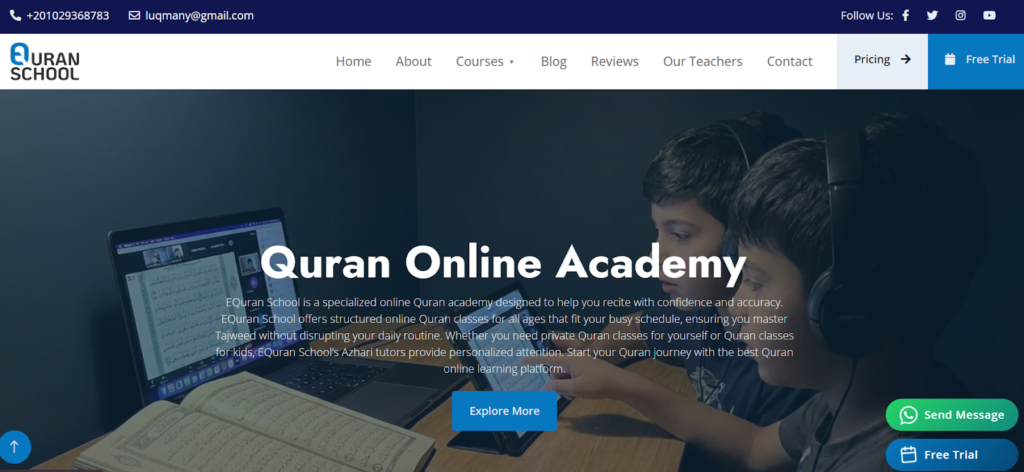
Starting Your Quran Learning Path at E Quran School
The hadith is both an honor and a call to action. If the best of people are those who learn and teach the Quran, then every Muslim has a clear path to excellence—regardless of age, background, or current level.
E Quran School makes that path accessible with:
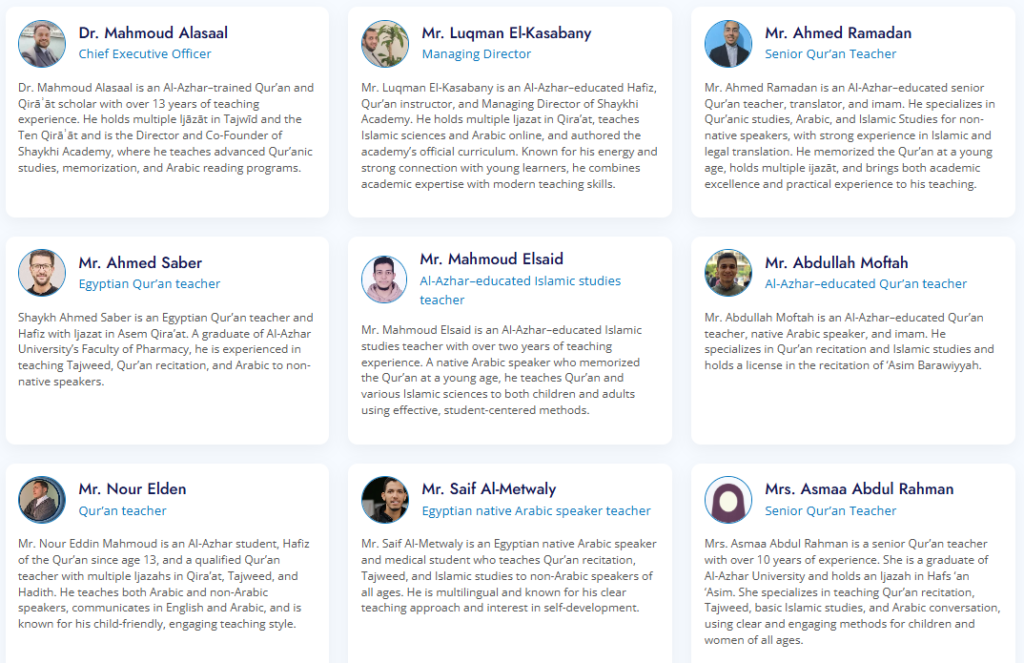
- Certified Huffaz and Qaris with 7+ years teaching non-Arabic speakers
- Structured courses: Quran Memorization (Hifz) Course, Online Quran Learning with Tajweed Course, Quran Recitation Classes, Quran Tafsir Course, and Quran Qirat Learning Course
- Dedicated programs for children: Online Quran Classes for Kids and Noorani Qaida Course for Kids
- The proprietary Al-Menhaj Book—designed exclusively for non-Arabic adult learners
- Learn Quran Online with Tajweed for Kids and Adults—flexible, live, one-on-one sessions
E Quran School provides complete curriculum including:
- Quran Memorization (Hifz) Course
- Online Quran Learning with Tajweed Course
- Quran Tafsir Course
- Online Arabic and Quran Classes
- Quran Qirat Learning Course
- Online Quran Recitation Classes
- Noorani Qaida Course
- Noorani Qaida Course for Kids
- Online Quran Classes for Kids
Book a free trial class at E Quran School and experience personalized Quran instruction that adapts to your unique learning needs, Insha’Allah.
Conclusion
Learning and teaching the Qur’an represents one of the highest forms of devotion. Through recitation, memorization, and reflection, believers strengthen their relationship with Allah while gaining guidance that shapes their character, decisions, and daily conduct.
The prophetic traditions emphasize remarkable rewards for those devoted to the Qur’an—from elevated ranks in Paradise to its intercession on the Day of Judgment. Even those who struggle while learning are promised multiplied rewards for their effort and perseverance.
A sincere Qur’an learner embodies consistency, accuracy, and pure intention. By studying diligently and sharing knowledge with others, Muslims contribute to preserving the Qur’an’s message while nurturing faith within themselves and their communities.


Leave a Reply